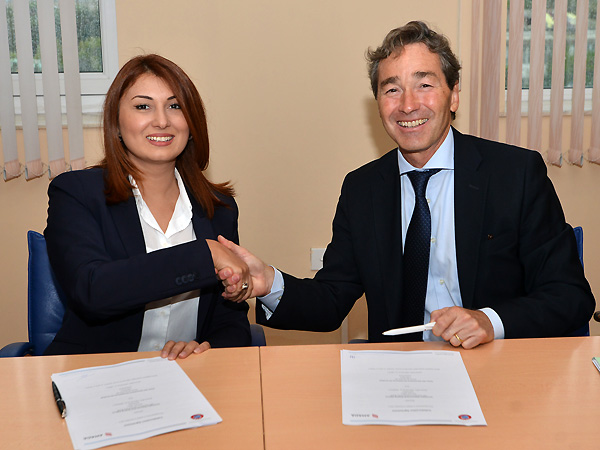
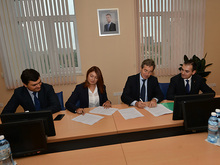
The cooperation agreement has been signed between UEFA and Azerbaijan National Anti-Doping Agency (ANADA) in AFFA headquarters today.
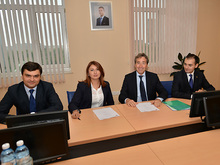
After signing the cooperation agreement by UEFA medical and anti-doping head Marc Vouillamoz and ANADA head Shafag Huseynli representatives of the Agency are authorized to take doping tests during domestic and international games. Sarkhan Hajiyev, deputy AFFA General Secretary and Vyacheslav Khomenko, a doctor of Azerbaijan National A-team also participated at the meeting. After the official signing ceremony Marc Vouillamoz and Shafag Huseynli expressed their views on affa.az website.
Marc Vouillamoz: “During my visit to Baku we had open discussions with AFFA and ANADA. We had fruitful meetings with both organizations. Within the framework of the agreement we will work together on both national and international levels. We are trying to support players and clubs. Physicians of the Premier League teams have more experience in the fight against doping. We are planning to hold workshops for doctors and staff members of I Division clubs in Baku. We will provide them with the necessary information. The agreement will see the organizations coordinating their anti-doping programmes and testing activities, exchanging information and intelligence considered useful in planning doping tests. We are stronger if we work together against doping”.
Shafag Huseynli: “One of the main tasks facing us is to prepare a productive, comprehensive and up-to-date test plan. Under this plan, anti-doping tests will be held throughout the year. In comparison with other kinds of sport, doping testing is somewhat different in football. During the VI Islamic Solidarity Games in Baku we conducted number of doping tests according UEFA standards during football competitions. We have some experience in this field. By signing the cooperation agreement, our responsibility is increased. After that, UEFA will instruct us to carry out doping tests during international events in Azerbaijan. We were also offered to involve some of our doping controllers in trainings to improve their practice. Sharing information and coordinating the testing will make it easier for us to protect the clean athletes. After that, if it is needed our staff members will also be able to carry out doping tests both in our country and abroad”.